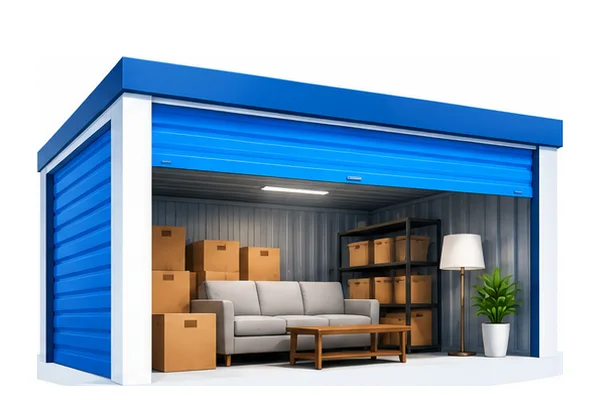
Shipping container storage means renting a steel container, usually in a secure outdoor yard, instead of a unit inside a building. It is often cheaper than indoor storage, you can normally drive right up to the doors, and containers are tough and lockable. The main things to plan for are condensation and the lack of heating. For furniture, garden kit, tools and business stock, a container is often an excellent choice.
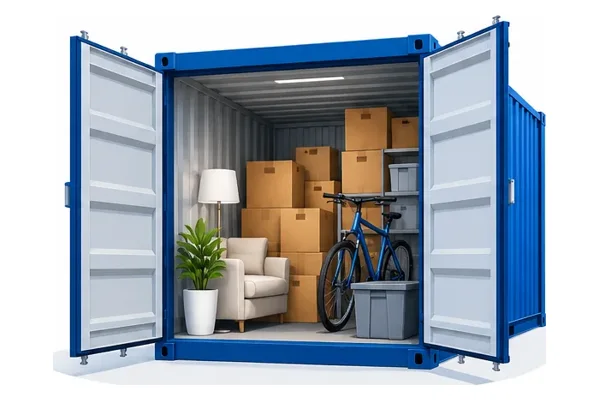
Container sizes
Storage yards most often offer 10ft, 20ft and 40ft containers, though some also have 8ft units. Internal sizes vary a little between manufacturers, so check with the store, but these are typical figures for standard containers:
| Container | Typical internal size (L x W x H) | Roughly suits |
|---|---|---|
| 10ft | About 2.8-3.0m x 2.3m x 2.4m | Contents of a one-bedroom flat, or seasonal and garden items |
| 20ft | About 5.9m x 2.35m x 2.39m | A two- to three-bedroom home, or business stock |
| 40ft | About 12.0m x 2.35m x 2.39m | A large house, or bulky commercial storage |
Sources: 20ft and 40ft figures from Alconet Containers; 10ft figures from Sea Containers, which notes that specifications vary between manufacturers. If you are not sure how much space you need, our size guide will help you work it out.
Drive-up access
The biggest practical plus of container storage is access. Most yards let you park your car or van right next to the doors, so you can unload straight in without trolleys, lifts or long corridors. That makes moving day quicker and is handy if you need to get in and out often, for example for trade tools or stock.
Check the yard's opening hours and gate access, as some container sites have shorter hours than indoor stores. Also ask whether the ground is level and surfaced, which matters if you are wheeling heavy items.
Loading tips
- Put the things you will need least at the back, and anything you might want soon near the doors.
- Stack heavy boxes at the bottom and lighter ones on top, keeping stacks stable.
- Leave a narrow walkway down one side if you will need to reach items at the back.
- Stand mattresses and sofas on their ends to save floor space, and protect them with covers.
- Keep a simple list of what is where, and tape a copy inside the door.
Condensation and damp
Steel heats up in the sun and cools quickly at night. That temperature swing can cause condensation inside, especially in spring and autumn. Good stores reduce this with vents, insulated linings or anti-condensation coatings. You can help too:
- Make sure everything is completely dry before loading.
- Stand items on pallets so nothing sits directly on the floor.
- Leave gaps around the walls so air can circulate.
- Use moisture absorbers and replace them when full.
- Cover furniture with breathable dust sheets rather than plastic.
For things that really dislike damp, like antiques, artwork or electronics, consider an indoor unit instead. Our guide to heated and climate-controlled storage explains when that is worth it.
Security
Containers are built to cross oceans, so the steel walls and doors are tough. Most yards add fencing, gated access, CCTV and lighting. Use a strong padlock or a container lock box that covers the lock, which makes it harder to cut. Our guide on whether self storage is safe has a full checklist of features to ask about.
What suits a container
Containers work well for:
- Household furniture during a move or renovation
- Garden furniture, mowers and outdoor equipment
- Tools, building materials and trade equipment
- Business stock in boxes or on pallets
- Bikes, camping gear and other seasonal items
Some yards also allow vehicles in larger containers - see can you store a car in storage. The usual banned items still apply, such as fuel, gas bottles and anything perishable, so check our list of what you can't put in storage. To weigh up the two main options, read container vs indoor storage.
Looking for a container near you? Tell us the size you need and every suitable container yard nearby can send you a price.