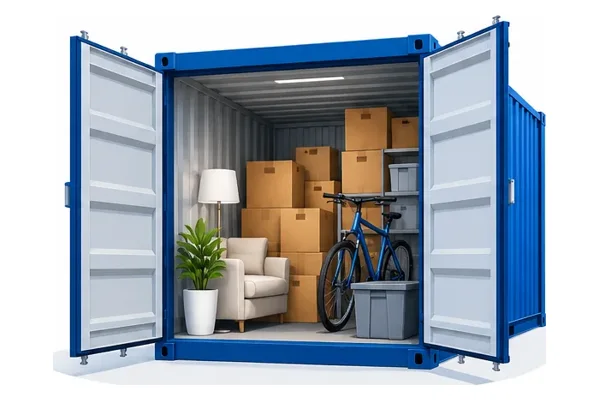
Often, yes, but it depends on the store. Some self storage sites and container yards accept cars, motorbikes and small vans in large drive-up units or 20ft containers. Many indoor stores do not, because of access, fire safety or insurance rules. If a store does accept vehicles, expect conditions around fuel, batteries and insurance, and you will need to think about tax and SORN too.
Store rules vary
There is no single rule across the industry, so always ask before you book. Things that commonly differ:
- Whether vehicles are allowed at all. Container yards and stores with drive-up units are the most likely to say yes.
- Which vehicles. Motorbikes and scooters fit in smaller spaces and are accepted more widely. Vans depend on height and length.
- Paperwork. Some stores ask for proof of ownership, the V5C logbook or proof of insurance.
- Conditions. Many require a near-empty fuel tank and a disconnected battery, and ban storing spare fuel.
Fuel, gas and other flammables are almost always banned in storage. See our guide to what you can't put in storage for the usual list.
What size do you need?
A car needs one of the larger units, with a door wide and tall enough to drive through and room to open a door once it is parked. A standard 20ft container is about 5.9m long and 2.35m wide inside, which fits many cars, though getting out of the doors once parked can be tight. Measure your vehicle, including mirrors, and compare it to the unit and the door opening. A motorbike can fit in a much smaller space. Our size guide and shipping container storage guide have more detail.

Preparing a vehicle for storage
- Follow the store's fuel rule. Many ask for a low fuel level. Check what they require before you arrive.
- Deal with the battery. Disconnecting it is usually required. Ask whether you can use a trickle charger, as most units have no power.
- Clean it inside and out. Dirt and food crumbs attract pests and trap moisture.
- Check tyres. Inflate them properly to reduce flat spots over a long stay.
- Use a breathable cover. It keeps dust off without trapping damp.
- Do not leave the handbrake on for months. Many owners chock the wheels instead to stop the brakes sticking. Check your manual first.
Tax, SORN and insurance
If you take a vehicle off the road and stop taxing and insuring it, you need to make a SORN (Statutory Off Road Notification). The DVLA says a vehicle counts as off the road if it is not kept or used on a public road, for example in a garage, on a driveway or on private land. You get a refund for any full months of tax left, and you can be automatically fined £80 if you have neither tax nor a SORN. Driving a SORN vehicle on a public road, except to a pre-booked MOT, can lead to a fine of up to £2,500. Check the details on GOV.UK's SORN guidance.
Insurance is separate. Once a vehicle is SORN you no longer need road insurance, but you will probably still want cover for theft, fire and damage while it is stored. Some insurers offer laid-up or storage cover. The store may also require you to insure the vehicle. Read the store's terms and speak to your insurer, as we cannot tell you what cover is right for your situation.
Alternatives to a storage unit
- Specialist vehicle storage. Dedicated car storage firms offer dehumidified buildings, battery care and collection. They suit classic and high-value cars but usually cost more.
- A rented garage. Councils, housing associations and private owners rent lock-up garages in many areas.
- A private driveway. Family or friends with spare space may be the cheapest option, as long as the land is private.
- Caravan and motorhome storage sites. These sometimes take cars and vans too, usually outdoors.
For an idea of what a large unit costs, see our guide to how much self storage costs.
Need somewhere to keep a car, bike or van? Tell us about your vehicle and every suitable store near you that accepts vehicles can send you a price.