If you are moving or working abroad for a while and plan to come back, storing some of your belongings in the UK can be cheaper and simpler than shipping everything or selling it all. The key is to decide early what to ship, store and sell, prepare items properly for a long stay, and set up the account so you can manage it from overseas. Here is a practical guide.
Ship, store or sell?
Start by thinking about how long you will be away and whether you are likely to come back to the same area. Then sort your belongings:
- Ship: things you will use every day abroad and that are hard or expensive to replace there. Check with your removals firm or shipping company about customs rules and costs for your destination.
- Store: furniture, sentimental items, photos and things you will want when you return but don't need while away. Good quality furniture is often cheaper to store than to replace.
- Sell or give away: cheap furniture, old appliances and anything that would cost more to store than to buy again later. UK electrical items may also not suit the plugs or voltage in some countries.
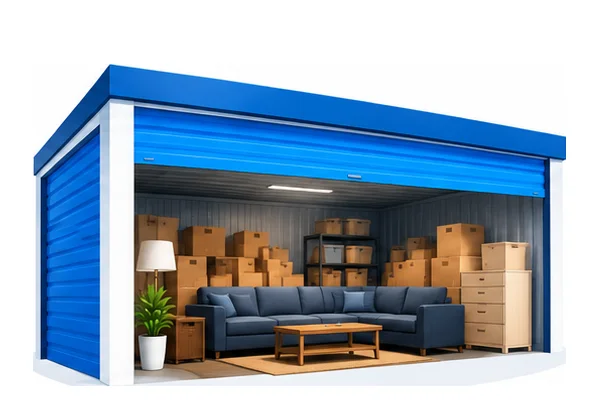
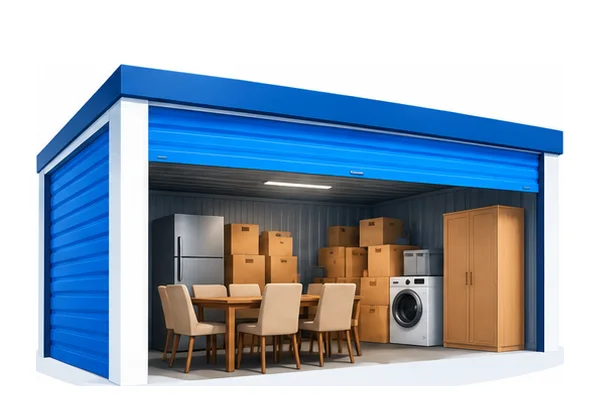
A simple test is to compare the likely storage cost over the time you are away with the cost of replacing each large item. Our guide to self storage costs can help you estimate. For example, large units (200 sq ft and up) often cost £200-£400+ a month, so it pays to be selective (MyBuilder price guide).
Preparing items for long-term storage
Things stored for months or years need more care than a short stay.
- Clean and dry everything. Damp is the main cause of mould and musty smells. Wash fabrics, wipe down furniture and let it dry fully.
- Defrost and dry appliances. Fridges and freezers should be clean and dry, with doors left slightly open in storage.
- Use breathable covers. Cotton dust sheets and furniture blankets are better than sealed plastic, which can trap moisture over time.
- Raise items off the floor using pallets or boards, especially in a container.
- Take apart large furniture where you can, and keep screws and fittings in labelled bags taped to the piece.
- Keep an inventory with photos, stored in the cloud, so you know what is where and can check condition when you return.
Our guide to storing furniture during a move has more on wrapping and loading. Remember that some things can't go in at all, such as fuels, gas bottles and food. See what you can't put in storage.
Unit or container?
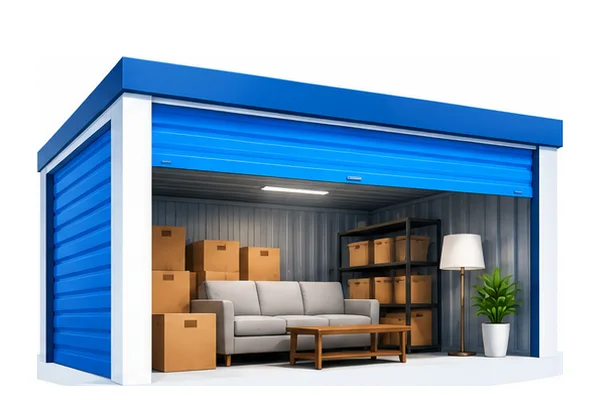
For long-term storage, think about the conditions as much as the price. An indoor unit in a building can be better for wooden furniture, documents and electronics, as it is more protected from changes in temperature. A container can offer good value per square foot and drive-up access for loading, but check it is dry, well maintained and secure. Our guide to container vs indoor storage compares the two.
Paying and managing the account from abroad
Set this up before you leave so you don't run into problems later.
- Use automatic payments. A direct debit from a UK bank account or a recurring card payment avoids missed payments. Check what the store accepts.
- Know the rules on late payment. Read the terms carefully. Stores can have rights over the contents if fees go unpaid for long enough, so keep your payment details up to date.
- Keep your contact details current. Give the store an email address and phone number that will work abroad.
- Check insurance. Make sure cover is in place for the full time you are away, and that the value reflects what is stored. Your home contents policy is likely to end when you move out.
- Ask about longer-term discounts. Some stores offer a better rate if you pay several months up front, but weigh this against flexibility if your plans change.
Letting someone else access your unit
You may need a family member or friend to get something out, check on the unit, or close the account for you. Ask the store how they handle this before you sign. Many will let you add an authorised person to the account, who may need to show ID. Leave them a copy of your inventory and tell them where the key or access code is kept. Make sure they know the store's access hours.
If you are a student going on a year abroad, our student storage guide covers sharing and short-term options too.
Moving abroad? Tell us your postcode, rough size and how long you'll be away, and every suitable store near you can send you a price before you go.