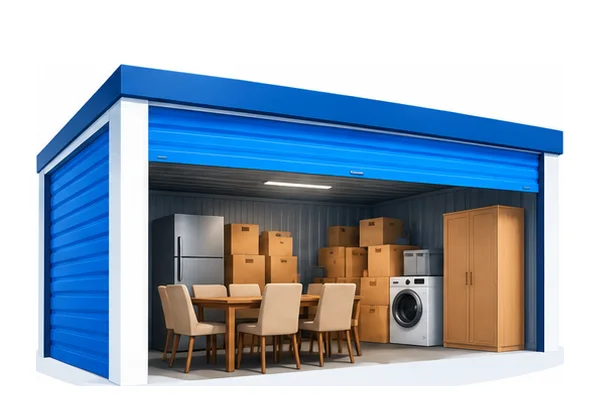
Storage can make downsizing much less stressful, because it gives you time to make decisions about furniture and keepsakes without rushing them before moving day. The trick is to use it as a short-term breathing space with a clear end date, not as a permanent home for things you will never use again. Here is how to sort your belongings and keep storage costs under control.
Start with the new home, not the old one
It is tempting to start by going through the loft. A better first step is to measure your new home. Get the floor plan, measure the rooms, and note how much wardrobe, cupboard and kitchen space there is. Then look at your current furniture and ask a simple question: does this fit, and do I have a place for it?
Large pieces such as dining tables, sideboards and double wardrobes are usually where downsizing decisions get hardest. Measuring early stops you paying to move or store something that will never fit through the door.
Sort everything into four piles
Go room by room and put every item into one of four groups. Coloured stickers or labels help, especially if family are helping out.
- Keep: things you use regularly and that fit the new home.
- Store: things you genuinely want but can't place yet. For example, a piece you might pass to a grandchild when they get their own place, or items you will decide on once you have lived in the new home for a few months.
- Sell: good quality furniture, collectables and appliances that nobody in the family wants.
- Give away or recycle: items for family, friends, charity shops or the tip.
Be honest about the "store" pile. If you would not pay to move it twice, it probably belongs in one of the other three.
Giving things to family
Downsizing often means passing on furniture, china, photos and heirlooms. Talk to family early, ideally before the move, so they have time to decide and arrange collection. A few tips:
- Make a list or take photos of the items on offer and share it with everyone at once, so it feels fair.
- Agree a date by which things need collecting. If someone needs more time, a small storage unit can bridge the gap, but agree who pays and for how long.
- Don't be surprised if younger relatives don't want large brown furniture. It is common, and it's not a reflection on you.
How to avoid paying to store things forever
The biggest risk with downsizing storage is that months turn into years, and the monthly cost quietly ends up higher than the value of what is inside. To avoid that:
- Set a review date. Put a date in the diary, say three or six months after moving, to go back through the unit.
- Keep an inventory. A simple list on paper or a phone makes it easy to decide things later without visiting.
- Choose the smallest unit that works. Use our storage size guide and pack tightly. A small unit for a handful of furniture pieces and boxes costs far less than a room-sized space.
- Compare value against cost. If something would cost less to replace than to store for a year, let it go.
- Clear it in stages. Each time you visit, take something out to sell, donate or bring home. Once the unit is half empty, downsize to a smaller one.
As a rough guide, small units (10-25 sq ft) tend to cost around £20-£100 a month and medium units (50-150 sq ft) around £50-£200, depending on where you live (MyBuilder price guide). Our guide to self storage costs has more detail by region.
Practical tips for the move itself
- Book storage before moving day. Ask your removals firm to drop the "store" items at the unit on the way to your new home, so they are only handled once.
- Protect furniture properly. Use covers and blankets rather than plastic wrap for long stays. See our guide to storing furniture during a move.
- Think about access. If you won't be driving, a store with easy ground floor access, trolleys and helpful staff makes visits much easier. Some stores can also add someone else to the account, so a family member can visit for you.
- Check what's allowed. Paints, fuels and some other items can't go into storage. See what you can't put in storage.
If your move is being held up by a buyer or seller further along, our guide to storage when a house chain breaks covers short-notice options.
Downsizing soon? Tell us roughly how much you need to store and your postcode, and every suitable store near you can send you a quote.