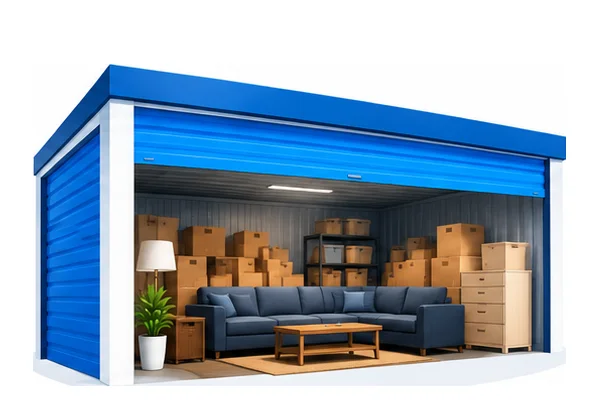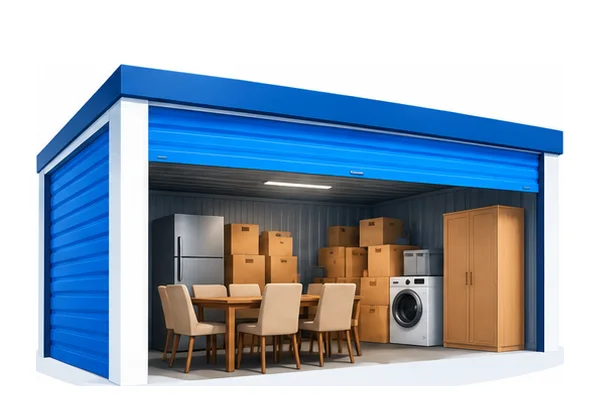
The safest place for your furniture during a renovation is usually out of the house altogether. Building work brings dust, paint, heavy tools and lots of people walking through, and even covered furniture can get scratched or stained. A self storage unit nearby, or a storage container on or near your property, keeps everything clean and frees up space for the builders to work faster. Here is how to plan it.
Do you actually need storage?
Not every project needs it. If you are redecorating one bedroom, moving furniture into another room and covering it may be enough. Storage starts to make sense when:
- You are having a new kitchen fitted and the old units, appliances and contents need to go somewhere.
- An extension or knock-through means several rooms are affected at once.
- Floors are being replaced, so rooms need to be completely empty.
- You are moving out while the work happens, for example during a full refurb or rewire.
- Your builder has asked for clear rooms so they can work safely and quickly.
Dust is the real enemy
Plaster and sanding dust is very fine and gets everywhere, including into closed drawers, sofa fabric and electronics. Dust sheets help, but they won't stop it settling in a room where walls are being chased or floors sanded. That's why moving good furniture, soft furnishings and electricals out of the house is often worth the cost.
If some things have to stay, group them in one room far from the work, close the door, cover everything and ask your builder about dust barriers and sealing doorways.
Container on site or a storage unit?
You have two main options, and each has trade-offs.
| Container on or near site | Self storage unit | |
|---|---|---|
| Access | Right outside, any time | At the store, during access hours |
| Space needed | A driveway or suitable area big enough for a container | None at home |
| Permission | May need council permission if it sits on the road or pavement | Not needed |
| Security | Depends on the lock and location | Usually CCTV, gated access and staff |
| Best for | Projects where you need items often, or you are staying at home | Longer projects, or when you are living elsewhere |
A container on a drive can also get in the way of skips, deliveries and scaffolding, so talk to your builder before booking. If you are unsure, our guide to container vs indoor storage compares the two in more detail.
Getting the timing right
Renovations often overrun, so plan for that from the start.
- Ask your builder for a realistic schedule, including which rooms are affected and when.
- Book storage to start a few days before work begins. This gives you time to move things without the builders waiting on you.
- Choose a rolling monthly contract. You don't want to be locked in for months if the job finishes early, or pay extra fees if it runs late.
- Plan the return. New floors, paint and plaster often need time to cure or dry before furniture goes back. Ask your builder when it is safe.
Keep everyday items accessible
Living through a renovation is easier if you plan what you will need day to day.
- Kitchen projects: set up a temporary kitchen with a kettle, microwave, toaster and a few plates and mugs. Store the rest of the crockery, pans and small appliances.
- Label boxes clearly by room and contents, and keep a simple list on your phone.
- Pack the unit with the things you may need at the front, such as seasonal clothes or tools, and long-term items at the back.
- Leave a walkway in larger units so you can reach things without unloading everything.
Choosing the right size
Count the rooms that need emptying and list the big pieces: sofas, beds, wardrobes, dining sets and appliances. Then use our storage size guide to match that to a unit. For example, the contents of a couple of rooms often fit in a medium unit. If you are emptying most of the house, a container or larger unit is likely to be better value per square foot.
Old kitchen appliances should be fully cleaned, dried and defrosted before storage, and gas bottles, paints and fuels are usually not allowed. See what you can't put in storage. For wrapping and loading tips, read our guide to storing furniture during a move.
Planning building work? Tell us your postcode and what you need to store, and every suitable store or container provider near you can send you a price.